How to Reduce Frizzy Curly Hair and Still Let Your Hair Breathe


If you have ever searched for how to reduce frizzy curly hair while standing in front of the mirror, you already know this is not just about appearance. Frizz feels personal. You follow routines, you buy new products, you try tips from everywhere, and yet your curls seem to change their mood overnight. Add waves into the mix, and things get even trickier, especially when you are still trying to find a wavy frizzy hair shampoo that cleans without leaving your hair confused or flat.
What makes this journey exhausting is not the effort. It is the inconsistency. One wash day feels magical. The next feels like nothing worked at all. The usual advice screams more control, more products, more discipline. But what if the issue is not a lack of control at all? What if your hair is simply asking for space?
That idea changes everything.
Frizz is not random behavior
Frizz is often treated like a flaw, but it is actually feedback.
Curly and wavy hair have bends and twists along the strand. Those bends make it harder for natural oils to travel down evenly. When hair feels dry, stressed, or overloaded, the cuticle lifts to pull moisture from the air. That lifted cuticle is what you see as frizz.
Some of the most common triggers look ordinary on the surface:
-
Over-cleansing the scalp
-
Using shampoos that strip too much
-
Layering heavy stylers without balance
-
Skipping moisturizer for too long
-
Touching hair repeatedly once it dries
Once you stop treating frizz like a personal failure, your routine starts to shift in a calmer direction.
How to prevent frizzy curly hair
Frizz prevention starts much earlier than styling. In fact, most frizz is decided during wash day.
Clean hair should still feel like hair
Shampoo is where most routines quietly fail. If your hair feels squeaky, tight, or rough right after washing, frizz later is almost guaranteed.
A cleanser should clean your scalp while leaving your lengths comfortable. Especially for waves, using a gentle wavy frizzy hair shampoo can be the difference between soft definition and uncontrolled puff.
If you are still unsure where to start, choosing the right frizzy hair shampoo from a routine designed specifically for textured hair can simplify everything and prevent unnecessary trial and error.
After rinsing, you should feel:
-
A fresh scalp
-
Hair that bends easily
-
No dry or brittle sensation
If shampoo strips too much, the rest of your routine has to overcompensate.
Conditioner is not optional
Conditioner is where hydration actually begins to settle in.
Apply it to soaking wet hair. Use your fingers to detangle slowly. Let the water help spread the product. This is when curl clumps quietly start forming, even if you do not notice them yet.
Skipping or rushing conditioner often shows up later as frizz that no styling product can fully fix.
Moisture does not have to feel heavy
Many people think moisture equals thick creams and heavy oils. That is not always true.
Hair responds best to hydration it can absorb. Ingredients like aloe vera juice, flaxseed extract, and chia seed extract deliver moisture while keeping the hair flexible and light.
This is why routines built as a moisture bundle tend to work better than random product layering. Each step supports hydration without suffocating the hair or coating it unnecessarily.
Style while the hair is still truly wet
Styling on damp hair leads to uneven results. Some strands stay thirsty, others get overloaded.
Styling on wet hair allows products to distribute evenly and seal moisture before the cuticle lifts. Scrunch gently. Avoid overworking sections. Let curls settle into their natural shape.
Frizz thrives on interruption.
Not all frizz comes from dryness
Sometimes hair feels soft but looks undefined. That is usually a structure issue, not a moisture issue.
Protein helps curls hold their shape. Too much protein can cause stiffness, but balanced formulas strengthen the strand without making hair crunchy.
This becomes important if your curls look good for an hour and then slowly lose definition.
Let your hair rest between wash days
Overstyling is a quiet frizz creator. Constant refreshing, re-scrunching, and layering products can rough up the cuticle.
Once your hair is styled, let it be.
Helpful habits include:
-
Sleeping on satin or silk
-
Loosely tying hair at night
-
Avoiding dry brushing completely
-
Touching curls as little as possible
Consistency matters more than perfection.
Waves and curls need different support
Wavy hair usually prefers lighter hydration and a soft hold. Too much butter can weigh it down quickly.
Curly hair often needs richer moisture and benefits from ingredients that improve elasticity.
Understanding where your texture sits saves you from copying routines that were never meant for your hair.
Styling becomes easier with balance
When hair is clean, hydrated, and supported, styling stops feeling like work.
Moisture-rich butters paired with flaxseed gels help seal hydration while keeping curls touchable. Flaxseed and chia seed support elasticity, so curls stretch and bounce back instead of puffing out.
On days when hair lacks structure, protein-based leave-ins and defining gels help curls hold their shape without stiffness.
Frizz control without losing movement
The goal is not perfectly smooth hair. It is healthy hair that moves.
When curls can breathe, hold moisture, and stay flexible, frizz reduces naturally. That is the sustainable answer to how to reduce frizzy curly hair without flattening your texture or killing volume.
Where Fix My Curls fits into real routines
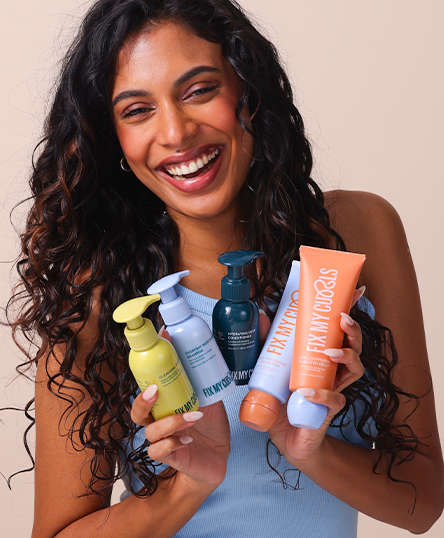
Fix My Curls products are designed for how textured hair behaves in real conditions, not ideal ones.
The Moisture Styling Duo supports dry, frizz-prone hair with hydration that absorbs instead of sitting on the surface. Aloe vera juice, flaxseed extract, and chia seed extract help curls stay soft, defined, and breathable.
The Protein Styling Duo supports strength and definition when curls need structure without crunch.
Together, these routines help curls and waves stay resilient through humidity, long days, and unpredictable weather.
Frizz is not something you need to fight forever. Sometimes it is simply your hair asking for better balance.